
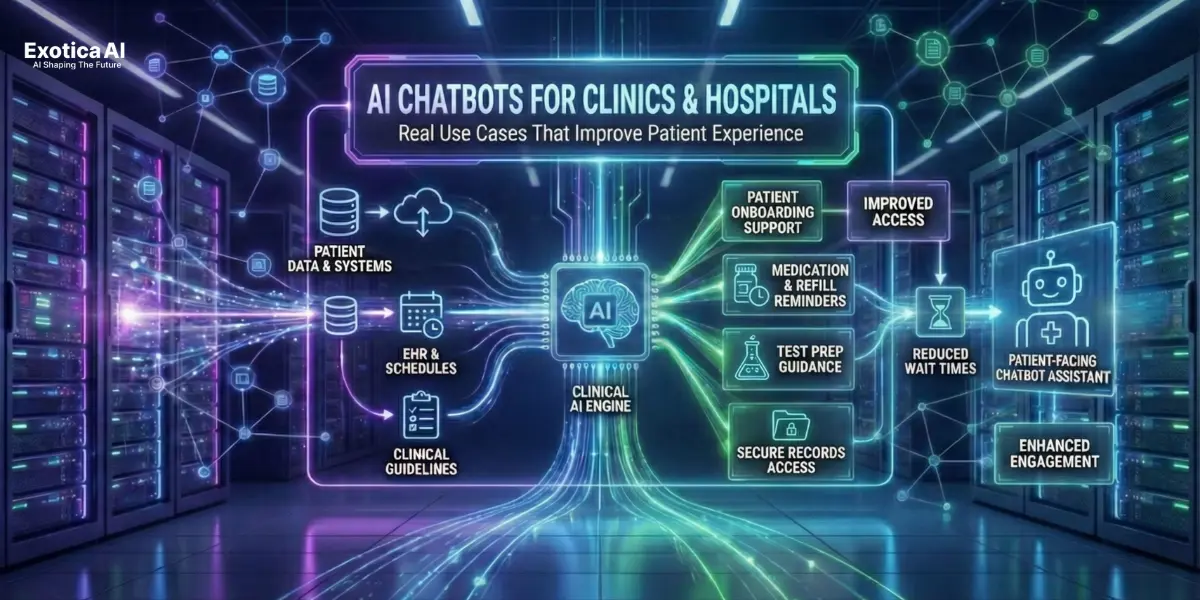
AI chatbots for clinics and hospitals are increasingly being used to improve patient communication and reduce administrative pressure across healthcare organizations. Clinics and hospitals handle thousands of patient interactions every day, including appointment requests, follow-up questions, reminders, onboarding, and administrative inquiries. Without automation, these interactions often overwhelm front desks and call centers, leaving staff stretched thin and patients frustrated by long wait times.
To address these challenges, healthcare providers are turning to AI chatbots as a practical support tool. When implemented responsibly, AI chatbots help improve patient experience, streamline operations, and reduce workload—without replacing healthcare professionals or compromising patient safety.
This article explains how clinics and hospitals are using AI chatbots in real-world environments, which use cases deliver the most value, and what healthcare providers should consider before implementation.
Why Clinics and Hospitals Are Adopting AI Chatbots
Healthcare organizations are facing growing pressure from multiple directions:
- Increasing patient volumes
- Staff shortages and burnout
- Rising operational costs
- Higher patient expectations for fast and accessible communication
Many providers are adopting AI chatbots for clinics and hospitals to manage repetitive, non-clinical interactions while ensuring patients receive timely and consistent responses. By automating routine communication, healthcare staff can focus more time on patient care rather than administrative tasks.
Unlike generic chatbots, healthcare chatbots operate within strict boundaries. They are designed to support communication and administrative workflows—not to diagnose conditions or provide medical treatment.
Key Benefits of AI Chatbots in Clinical Settings
When deployed with appropriate safeguards, AI chatbots offer clear benefits for both patients and healthcare teams.
Faster Patient Response Times
Patients can get answers, book appointments, or receive reminders without waiting on hold or calling during office hours.
Reduced Administrative Workload
Chatbots handle high-volume, repetitive tasks, allowing front-desk teams and care coordinators to focus on complex or urgent cases.
Improved Patient Experience
Clear, consistent communication reduces frustration and improves patient satisfaction.
Scalable Support
AI chatbots can manage thousands of conversations simultaneously, making them effective for both small clinics and large hospital networks.
Real Use Cases of AI Chatbots in Clinics and Hospitals
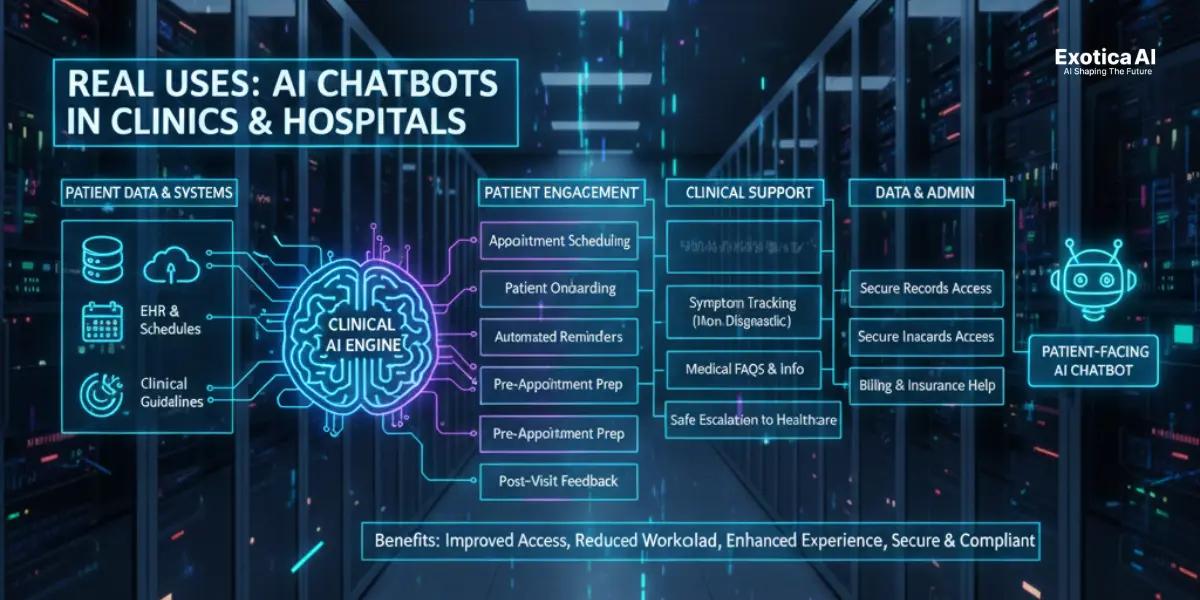
The most successful implementations of AI chatbots for clinics and hospitals focus on clearly defined, low-risk workflows that improve patient experience without interfering with clinical decision-making.
Appointment Booking and Scheduling
One of the most impactful applications of AI chatbots is appointment scheduling. Patients can book, confirm, reschedule, or cancel appointments through a simple conversational interface.
For clinics and hospitals, this results in:
- Lower call volumes
- Fewer scheduling errors
- Reduced no-show rates through automated reminders
- Greater convenience for patients
This use case alone can significantly reduce front-desk workload.
Patient Onboarding and Registration Support
New patients often have questions about registration, forms, insurance, and visit preparation. AI chatbots guide patients through onboarding steps, answer common questions, and help collect information before the visit.
This leads to:
- Faster check-in times
- Fewer incomplete forms
- Less confusion for patients
- Smoother clinic operations
Patients arrive better prepared, and staff spend less time correcting paperwork.
Automated Reminders and Follow-Ups
AI chatbots are widely used to send reminders for:
- Upcoming appointments
- Medication refills
- Follow-up visits
- Required documentation
Automated reminders help reduce missed appointments and support continuity of care without adding manual work for healthcare staff.
Pre-Appointment Preparation Guidance
Many tests and procedures require specific preparation, such as fasting or medication adjustments. Chatbots can send clear instructions in advance and answer basic preparation-related questions.
This helps:
- Reduce last-minute cancellations
- Prevent incomplete or delayed procedures
- Improve clinical efficiency
Patients feel more confident and informed before their visit.
Symptom Tracking and Patient Check-Ins (Non-Diagnostic)
Some clinics use chatbots to allow patients to log symptoms or report changes between visits. This information supports clinicians by providing structured updates without replacing medical assessment.
Important considerations include:
- Chatbots do not diagnose conditions
- High-risk responses are escalated to healthcare professionals
- Patients are clearly informed of chatbot limitations
When used correctly, symptom tracking improves patient engagement and follow-up care.
Medical FAQs and General Information
Clinics and hospitals receive a high volume of repetitive questions about:
- Clinic hours
- Services offered
- Policies and procedures
- Visit preparation
AI chatbots provide consistent, accurate answers while flagging sensitive questions for human review. This reduces staff interruptions and improves response consistency.
Secure Access to Medical Records and Results
Patients often request lab results or medical documents. AI chatbots can guide patients through secure request processes and notify them when records are available.
This improves transparency and reduces time spent waiting on phone calls or emails while maintaining privacy controls.
Post-Visit Feedback and Surveys
Patient feedback is critical for improving care quality. AI chatbots can deliver short, conversational surveys after visits, increasing response rates and providing actionable insights.
Safe Escalation to Healthcare Professionals
A critical feature of healthcare chatbots is knowing when to step aside. When conversations become complex, emotional, or urgent, the chatbot escalates the interaction to a healthcare professional with full context.
This ensures:
- Patient safety
- Proper clinical judgment
- Positive patient experiences
Safety, Privacy, and Compliance Considerations
AI chatbots used in healthcare environments must meet strict safety and compliance standards.
Healthcare providers should ensure chatbots:
- Protect patient data at all times
- Comply with healthcare data protection regulations
- Avoid providing diagnosis or treatment advice
- Clearly communicate their role and limitations
- Include reliable escalation workflows
Strong governance and human oversight are essential for responsible deployment.
When AI Chatbots Are Not Appropriate
AI chatbots should not be used for:
- Diagnosing medical conditions
- Providing treatment recommendations
- Handling emergencies without escalation
- Replacing clinical judgment
Understanding these limitations is critical to maintaining patient trust and safety.
How This Fits Into a Broader Healthcare AI Strategy
AI chatbots deliver the greatest value when integrated into a broader healthcare automation strategy that includes secure systems, clear workflows, and collaboration between technology and care teams.
For a comprehensive overview of how conversational AI supports healthcare operations, refer to our pillar guide on AI chatbots for healthcare.
Frequently Asked Questions
Final Thoughts
When implemented responsibly, AI chatbots for clinics and hospitals enhance patient experience, reduce administrative burden, and support healthcare teams without compromising safety or care quality.
At Exotica AI Solutions, we work with clinics and hospitals to design AI chatbot and automation solutions tailored for healthcare environments, with a strong focus on safety, secure integration, and real-world usability.
Healthcare AI works best when it supports—not replaces—the people providing care.

Mohit Thakur is an experienced Digital Marketing Expert, SEO Team Leader, and Content Writer with over 6 years of expertise in search engine optimization, content strategy, and digital growth. He specializes in research-driven SEO and crafting high-quality, compelling content that helps businesses improve their online visibility, organic traffic, and lead generation.
With hands-on experience across multiple industries, Mohit focuses on creating user-focused, well-researched content aligned with the latest Google algorithms and AI search trends. His approach combines technical SEO, content writing, content optimization, and data analysis to deliver consistent and measurable results.