
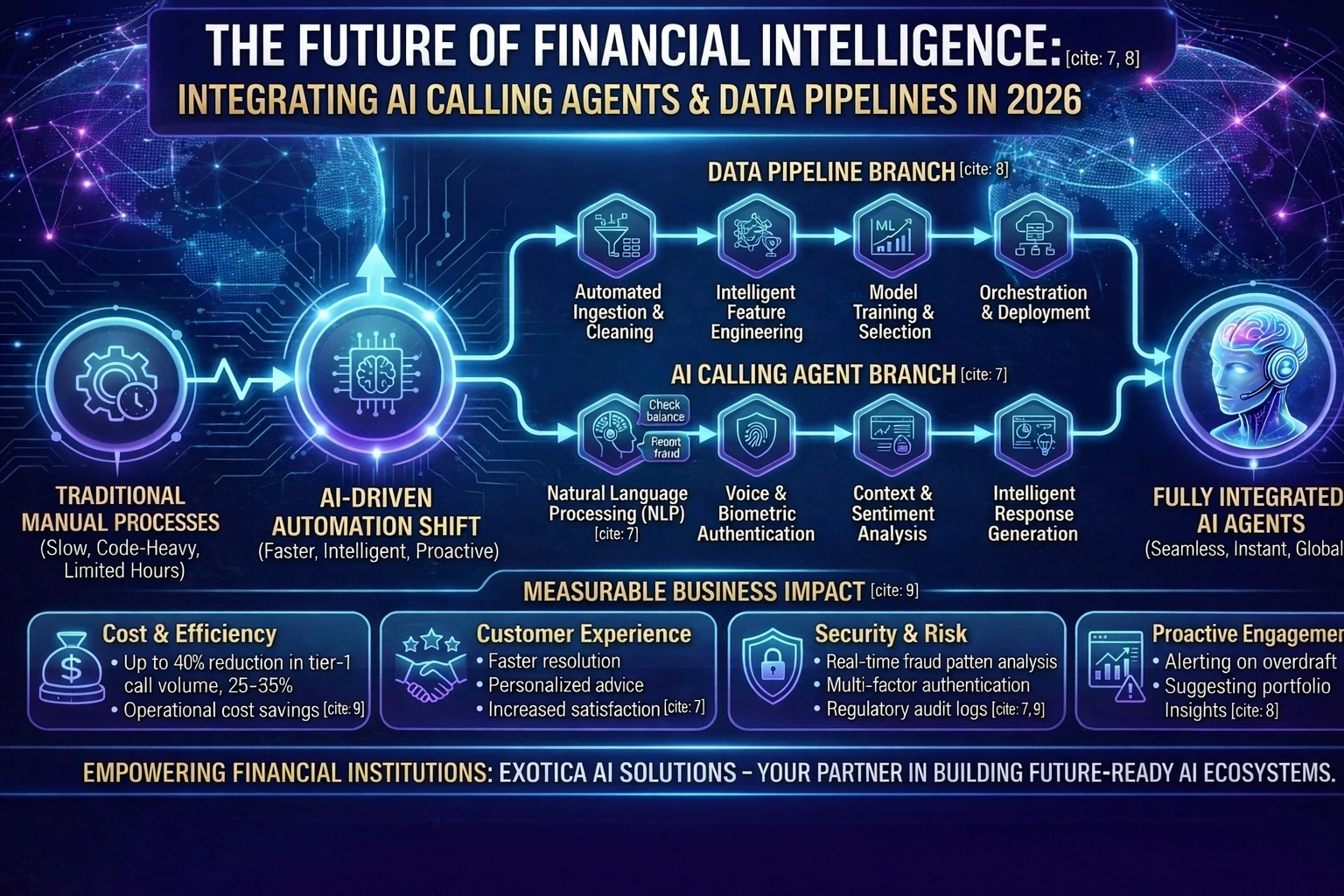
Intelligent automation solutions are redefining how enterprises operate, compete, and scale. Organizations are no longer focused on automating isolated tasks — they are building intelligent systems that combine artificial intelligence, automation, and orchestration to transform entire business workflows.
In 2026, intelligent automation is not just a technology initiative. It is an operational strategy.
This Comprehensive Pillar Guide Explains
- What intelligent automation really means
- Automation and AI: how they work together
- Intelligent automation vs artificial intelligence
- Intelligent process automation solution architecture
- Enterprise use cases and measurable ROI
- Governance and risk management
- Implementation roadmap
- Strategic evaluation framework
If your organization is evaluating intelligent automation services and solutions, this guide provides a structured, enterprise-ready blueprint.
What Is Intelligent Automation?
Intelligent automation is the integration of AI and automation technologies to execute business processes with embedded intelligence, predictive analytics, and real-time decision-making.
It Combines
- Robotic Process Automation (RPA)
- Artificial Intelligence (AI)
- models
- Natural language processing (NLP)
- Process mining
- Workflow orchestration platforms
Automation executes predefined rules.
AI analyzes patterns and predicts outcomes.
Intelligent automation merges both to deliver intelligent execution inside operational workflows.
According to research insights from Gartner and McKinsey & Company, enterprises achieve sustainable ROI only when automation initiatives align with strategic business objectives rather than standalone efficiency projects.
Benefits of Intelligent Automation
- 20–40% reduction in operational costs
- Faster processing and decision cycles
- Reduced compliance risk
- Improved customer experience
- Scalable operational capacity
Beyond efficiency, intelligent automation enhances resilience and agility — two critical drivers in modern digital transformation.
Automation and AI: A Clear Breakdown
What Is Automation?
- Executes rule-based tasks
- Processes structured data
- Improves speed and accuracy
What Is Artificial Intelligence?
- Learns from historical data
- Detects patterns
- Generates predictions
How AI for Automation Works
- Predicting exceptions before they occur
- Dynamically routing tasks
- Improving decision accuracy over time
- Continuously optimizing performance
When automation and AI work together, organizations move from static workflows to adaptive systems.
Intelligent Automation vs Artificial Intelligence
| Category | Artificial Intelligence | Intelligent Automation |
|---|---|---|
| Primary Role | Data analysis & prediction | Process execution |
| Deployment | Standalone models | Integrated enterprise systems |
| Output | Insights | Automated operations |
| Business Impact | Strategic intelligence | Operational transformation |
Intelligent Process Automation Solution Architecture
A scalable intelligent process automation solution includes five integrated layers:
1. Process Discovery
Data-driven analysis identifies inefficiencies and automation opportunities.
2. Execution Layer
RPA bots, APIs, ERP integrations, and workflow engines automate tasks.
3. Intelligence Layer
Machine learning, NLP, and predictive analytics enable contextual decision-making.
4. Orchestration Layer
Coordinates systems, human approvals, and exception workflows.
5. Governance & Monitoring
Ensures compliance, audit trails, model performance tracking, and risk mitigation.
True intelligent automation solutions integrate across all five layers — not just task automation.
Enterprise Use Cases by Function
Finance & Accounting
- Invoice processing
- Financial reconciliation
- Fraud detection
- Predictive cash flow forecasting
Result: Faster close cycles, improved audit accuracy, reduced operational cost.
Human Resources
- Resume screening with NLP
- Automated onboarding
- Payroll validation
- Workforce analytics
Result: Reduced hiring time, improved compliance, enhanced employee experience.
Supply Chain
- Demand forecasting
- Inventory optimization
- Vendor risk monitoring
- Logistics planning
Result: Reduced stockouts, improved forecast accuracy, lower overhead costs.
Customer Experience
- AI-powered chatbots
- Intelligent ticket routing
- Sentiment analysis
- Predictive churn alerts
Result: Faster response times and improved customer retention.
IT Operations
- Automated incident remediation
- Log anomaly detection
- Security monitoring
- Infrastructure provisioning
Result: Reduced downtime and stronger cybersecurity posture.
Real-World Scenario
A regional financial services firm implemented an intelligent process automation solution to streamline invoice reconciliation.
Before Implementation:
- 5-day average processing cycle
- 7% error rate
- Manual exception handling
After Deployment:
- 24-hour processing cycle
- 1% error rate
- Automated predictive exception routing
Outcome:
- 35% operational cost reduction
- Payback achieved within 11 months
This illustrates how AI and automation together drive measurable enterprise value.
ROI Framework for Intelligent Automation Solutions
Enterprise leaders require financial clarity before scaling automation.
Step 1: Establish Baseline
- Labor costs
- Error rates
- Processing time
Step 2: Estimate Improvements
- Time saved
- Error reduction
- Throughput increase
Step 3: Calculate Financial Impact
Annual Savings =
(Time Saved × Average Labor Cost)
+ Error Reduction Savings
+ Revenue Acceleration Gains
Step 4: Determine Payback Period
Implementation Cost ÷ Monthly Savings
Most intelligent automation services and solutions deliver ROI within 12–18 months when deployed strategically.
Governance, Risk & Compliance
Intelligent automation introduces new operational considerations:
- AI bias
- Data privacy compliance
- Model drift
- Cybersecurity exposure
Best Practices Include:
- Human-in-the-loop validation
- Continuous model monitoring
- Clear data governance policies
- Executive oversight
Sustainable automation requires accountability alongside innovation.
12-Month Implementation Roadmap
Phase 1: Strategy & Assessment
Process audit, automation opportunity mapping, KPI definition.
Phase 2: Pilot Deployment
Implement 2–3 high-impact workflows and measure ROI.
Phase 3: Enterprise Scaling
Expand cross-functional automation and integrate AI-driven decision models.
Phase 4: Continuous Optimization
Refine models, monitor performance, upskill workforce, enforce governance.
Structured rollout reduces risk and accelerates adoption.
How to Evaluate Intelligent Automation Services and Solutions
- Strategic alignment with enterprise goals
- Technical integration capability (ERP, CRM, cloud systems)
- Governance and compliance expertise
- Scalability beyond pilot
- Transparent ROI measurement
Organizations such as Exotica AI Solutions support enterprises in integrating automation, AI, and governance frameworks into cohesive digital transformation strategies.
The Future: Hyperautomation and Autonomous Operations
Hyperautomation refers to the strategic integration of multiple automation technologies across the enterprise.
Emerging Trends Include:
- Autonomous workflow orchestration
- Predictive enterprise analytics
- AI-driven decision augmentation
- Human-AI collaborative operating models
Enterprises that embed intelligent automation deeply into operations gain agility, resilience, and competitive differentiation.
Frequently Asked Questions
Pillar & Cluster Strategy for Topical Authority
This page serves as the core pillar for intelligent automation.
Supporting cluster articles should include:
- Intelligent Automation in Finance
- AI for Automation in Healthcare
- Intelligent Process Automation vs RPA
- Hyperautomation Strategy for Enterprises
- Enterprise AI Governance Framework
- Automation and AI in Supply Chain Optimization
Each cluster article should interlink contextually to strengthen search intent alignment and build structured authority.
Conclusion
Intelligent automation solutions are no longer optional for enterprises pursuing operational excellence. By integrating AI and automation into structured governance frameworks, organizations unlock measurable ROI, scalability, and resilience.
Enterprises that act now — with the right strategy, architecture, and execution partner such as Exotica AI Solutions — will transition from isolated automation initiatives to fully intelligent operations.
The future of enterprise performance is not just automated.

Mohit Thakur is an experienced Digital Marketing Expert, SEO Team Leader, and Content Writer with over 6 years of expertise in search engine optimization, content strategy, and digital growth. He specializes in research-driven SEO and crafting high-quality, compelling content that helps businesses improve their online visibility, organic traffic, and lead generation.
With hands-on experience across multiple industries, Mohit focuses on creating user-focused, well-researched content aligned with the latest Google algorithms and AI search trends. His approach combines technical SEO, content writing, content optimization, and data analysis to deliver consistent and measurable results.