
What is AI voice automation?
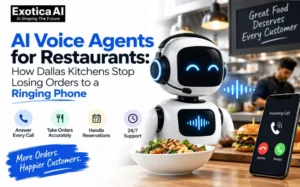
AI voice automation is the use of artificial intelligence to handle phone calls and voice-based customer interactions automatically — qualifying leads, booking appointments, managing support queries, and conducting outbound outreach without human staffing. Unlike rigid IVR systems, AI voice automation conducts genuine, natural conversations that adapt in real time to what the caller says.
Your competitors are not hiring more people to handle more calls. They are deploying AI voice automation — and they are converting leads you are losing while your phones ring unanswered after 5 PM.
The business case for AI voice automation in 2026 is no longer speculative. It is operational. Across healthcare, real estate, logistics, finance, e-commerce, education, and professional services, organizations that have deployed intelligent voice systems are reporting faster lead response, lower support costs, higher appointment show rates, and compounding ROI that widens every quarter. The organizations that have not yet adopted AI voice automation are, in most cases, unaware of exactly how much that delay is costing them.
This guide makes the business case — industry by industry — for why AI voice automation is not a technology experiment. It is a competitive infrastructure decision that every business picking up a phone to acquire or serve customers needs to make in 2026.
Every Hour Your Phone Goes Unanswered After Hours Is a Lead Your Competitor Is Closing. Let’s Fix That.
What Is AI Voice Automation — and How Is It Different From What Came Before?
AI voice automation is the application of natural language processing, speech recognition, machine learning, and conversational AI to the full lifecycle of phone-based business communication. It covers inbound call handling, outbound lead follow-up, appointment scheduling, payment reminders, customer support, and feedback collection — all conducted through voice conversations that feel natural rather than scripted.
The distinction from traditional telephony systems matters for every business evaluating this technology:
- IVR systems present menus and require keypad input. They frustrate callers and produce high abandonment rates. They are not AI voice automation.
- Robocalls and voicemail drops deliver pre-recorded messages with no conversational capability. They are not AI voice automation.
- AI voice automation conducts genuine two-way conversations. It understands what the caller says, detects intent and sentiment, asks follow-up questions, handles objections, books appointments, and updates your CRM — all without a human on the line.
The technology that makes this possible has crossed a quality threshold in 2026 that makes the difference between AI voice automation and a human agent indistinguishable to most callers in routine interactions. That crossing of the quality threshold is what has transformed AI voice automation from a technology curiosity into a mainstream business infrastructure investment.
The Three Business Problems AI Voice Automation Solves Across Every Industry
Before the industry-by-industry analysis, it is worth naming the three problems that make AI voice automation universally valuable regardless of sector.
Problem 1: The Response Speed Gap
Research consistently shows that the probability of converting an inbound lead drops by more than 80 percent after the first five minutes of non-response. Human teams — constrained by business hours, call queues, and staffing levels — cannot reliably respond within five minutes to every inquiry. AI voice automation responds in under sixty seconds, around the clock, regardless of call volume.
Problem 2: The Scale-Cost Constraint
Traditional call operations scale linearly with headcount. Every additional call handled requires an additional agent hour. AI voice automation handles unlimited concurrent calls at a fixed infrastructure cost — decoupling call capacity from personnel cost entirely. This is why AI voice automation produces the most dramatic ROI during peak periods: exactly when the cost of manual call handling is highest.
Problem 3: The Consistency Failure
Human call quality varies by agent, by time of day, by workload, and by mood. Scripts get skipped. Qualification questions get dropped. Brand standards drift. Every interaction handled by AI voice automation follows the same script, asks the same qualification questions, maintains the same tone, and generates the same structured data output — on every call, every time.
These three problems exist in every industry that uses the phone as a business communication channel. That is why the adoption case for AI voice automation is not industry-specific. It is universal.
Healthcare: AI Voice Automation That Reduces No-Shows and Reclaims Admin Hours
Healthcare is one of the most call-intensive operating environments in any industry. A mid-size clinic handling 200 appointments per week is managing hundreds of outbound reminder calls, inbound rescheduling requests, intake information calls, and post-visit follow-ups — most of which are routine, structured, and entirely automatable.
AI voice automation in healthcare delivers measurable outcomes across every category of routine call:
- Automated appointment reminders reduce no-show rates by 60 to 70 percent — directly recovering lost appointment revenue without requiring a single staff member to dial
- Inbound scheduling calls handled instantly, with availability checked in real time and confirmed directly to the patient’s calendar
- Patient intake calls that collect demographic and insurance information before the visit — eliminating in-office paperwork delays
- Post-visit follow-up calls for medication adherence and care plan compliance, with escalation to clinical staff for concerning responses
- Prescription refill routing calls that triage requests and direct complex cases to licensed clinical staff
For multi-location healthcare operations, AI voice automation standardizes the patient communication experience across every site — eliminating the service quality variance that is otherwise impossible to manage at scale. Every interaction is HIPAA-compliant, fully recorded, and auditable. Explore the full scope of healthcare AI solutions that combine voice automation with workflow intelligence.
Real Estate: AI Voice Automation That Closes the Lead Response Window
The lead response problem in real estate is the most expensive version of the response speed gap in any industry. A pre-approved buyer submits a property inquiry at 9 PM. An AI voice automation system calls that buyer back within sixty seconds, qualifies their budget and timeline through natural conversation, and books a showing directly onto the agent’s calendar — all before the buyer has even finished browsing competing listings.
By Monday morning, when a manually-operated brokerage returns that same call, the showing is already booked. The deal is already in motion. The lead is already gone.
AI voice automation for real estate handles the entire front-end of the lead conversion process:
- Instant outbound callback on every new lead across all acquisition channels — website, portal, paid social, referral
- Buyer qualification through conversational dialogue covering budget, location preference, timeline, and financing status
- Seller lead qualification covering property address, motivation, timeline, and pricing expectations
- Showing scheduling with direct calendar integration — no human coordination required
- Automated nurture sequences for leads that do not convert on first contact, with re-engagement calls triggered by defined time intervals
- CRM synchronization of every call outcome, qualification score, and agent follow-up note
For brokerages spending significant budget on lead generation, AI voice automation is the multiplier that converts that investment into actual appointments rather than unanswered inquiry forms. Every dollar spent on lead generation produces more output when every lead receives an instant, qualified response.
Finance and Insurance: Compliant AI Voice Automation at Enterprise Scale
Financial services and insurance operate in a compliance environment where every customer communication must be documented, consistent, and regulation-ready. This is precisely where AI voice automation has a structural advantage over human call operations.
An AI voice system produces a complete, structured record of every interaction — call content, duration, customer responses, escalation triggers, and outcome classification — automatically. The audit trail that regulators require is a byproduct of normal operation, not an additional administrative burden.
The highest-ROI applications of AI voice automation in finance and insurance include:
- Policy renewal outreach: Every expiring policy triggers an automated renewal reminder call on the right day, at the right time, with the right messaging — without a dialer campaign or manual scheduling
- Claims first notice of loss: Initial claims intake calls handled by AI with structured data collection flowing directly into claims management systems
- Payment reminder and collections: Compliant, professionally scripted payment reminder calls with intelligent routing of disputed or complex cases to licensed human agents
- New policyholder onboarding: Welcome calls, document checklist communication, and next-step confirmation — all automated and logged
- Inbound product inquiry handling: Caller intent detected and routed instantly to the right product specialist or self-service resolution
The compliance advantage compounds over time. Every call handled by AI voice automation contributes to a growing performance dataset — showing regulators, auditors, and management exactly how every customer communication was handled and what outcome it produced.
Running High-Volume Outbound Calls Manually? AI Voice Automation Handles Thousands Simultaneously at a Fraction of the Cost.
E-Commerce: AI Voice Automation That Scales Support Without Scaling Headcount
E-commerce businesses face a fundamental support scaling problem. Order volume responds to marketing spend — but support capacity responds to headcount. When a promotional campaign drives a 5x spike in orders, support call volume spikes proportionally. The options under manual operations are: overstaff for peak periods and carry idle capacity during quiet periods, or understaff and damage customer relationships during the moments when purchase satisfaction is most fragile.
AI voice automation eliminates this constraint entirely. Call handling capacity scales automatically with volume — at no additional per-call cost.
For e-commerce operations, the primary AI voice automation use cases are:
- Order status inquiries handled instantly with real-time order management system integration — zero hold time, zero queue
- Returns and refund process initiation through automated call flows that collect required information and trigger fulfillment system updates
- Proactive delivery exception calls when shipments are delayed, damaged, or lost — reaching customers before they call you
- Post-purchase follow-up calls for review solicitation and repeat purchase offers — turning one-time buyers into repeat customers
- Subscription management calls for cancellation retention, with AI-handled save offers before escalating to human retention agents
The integration layer is what makes AI voice automation genuinely useful in e-commerce rather than merely functional. When the voice system connects to your order management platform, your CRM, and your returns system, every call is handled with full customer context — producing resolutions that satisfy customers without human involvement.
Logistics: AI Voice Automation for Dispatch, Delivery, and Customer Communication
Logistics is a communication-intensive operation where delays in information flow create cascading operational failures. Dispatchers, drivers, customers, and shipper partners all require real-time, accurate status communication — and manual call handling at the volume required by modern logistics operations is both expensive and error-prone.
AI voice automation in logistics addresses the communication layer that sits between operational systems and the people who need information from them:
- Automated customer delivery update calls triggered by shipment status changes in the TMS — proactive communication before customers call asking for updates
- Delivery confirmation calls post-completion with structured outcome logging for proof of delivery documentation
- Carrier and driver communication calls for route confirmation, pickup scheduling, and exception reporting
- Customer satisfaction calls post-delivery for structured feedback collection and service quality monitoring
- Exception handling outreach for delays, damages, and missed delivery windows — reaching customers with accurate information and resolution options before the situation escalates
The integration between AI voice automation and logistics management systems — TMS, dispatch platforms, GPS tracking, and customer portals — is what converts reactive customer service into proactive customer communication. For the full picture of how AI is transforming logistics operations end to end, read our guide on AI in logistics: route optimization, dispatch, and customer support.
Professional Services: AI Voice Automation That Protects Billable Time
For law firms, accounting practices, consulting agencies, and marketing firms, every hour spent on administrative phone communication is an hour of billable time that never gets billed. Senior professionals who generate the majority of firm revenue are routinely pulled into appointment scheduling calls, document follow-up calls, status update calls, and invoice follow-up conversations that consume significant portions of their working day.
AI voice automation reclaims those hours systematically:
- Client appointment scheduling and confirmation calls — handled automatically with calendar integration and CRM logging
- Document collection follow-up calls with specific, structured requests tailored to each matter or engagement
- Project and engagement status update calls triggered by milestone completion in project management systems
- Invoice and payment follow-up calls with professionally scripted, compliant messaging and human escalation for disputes
- New client intake calls that gather background information and set expectations before the first billable consultation
For a professional service firm where senior staff bill at $300 to $500 per hour, recovering two hours per professional per week through AI voice automation produces an ROI that dwarfs the cost of deployment within the first billing cycle.
Education: AI Voice Automation for Enrollment, Retention, and Student Engagement
Educational institutions at every level — universities, colleges, vocational schools, and online learning platforms — manage high-volume, time-critical communication across admissions, financial aid, enrollment, and student support. The cost of missed communication at key decision points is enrollment revenue that never materializes.
AI voice automation in education handles:
- Admissions inquiry follow-up within sixty seconds of form submission — dramatically improving first-contact conversion rates for prospective students
- Acceptance and enrollment deadline reminder calls for admitted students who have not completed registration steps
- Financial aid application status calls with routing to human advisors for complex questions
- Early warning outreach for students showing behavioral signals of disengagement — missed classes, late assignments, declining participation — before withdrawal becomes the outcome
- Alumni development and fundraising calls with intelligent segmentation by graduation year, program, and giving history
The admissions use case mirrors the real estate lead response problem exactly. The institution that responds to a prospective student inquiry within sixty seconds — at 11 PM, over a weekend, during holiday breaks — converts at a measurably higher rate than the institution that responds three business days later when a staff member gets to the inquiry queue.
Measuring ROI: What AI Voice Automation Actually Delivers
The business case for AI voice automation is most credible when it is grounded in the metrics that executive decision-makers actually track. Across industries, the consistent performance outcomes from AI voice automation deployments include:
- Lead response time: From hours or days to under 60 seconds — improving first-contact conversion rates across all inbound channels
- No-show and cancellation rates: 60 to 70 percent reduction through automated reminder call sequences in healthcare, professional services, and education
- Cost per handled call: 70 to 85 percent reduction versus human agent handling for routine, structured call types
- Call handling capacity: Unlimited concurrent calls versus the finite capacity of human teams — enabling true scale without proportional cost growth
- CRM data completeness: 100 percent call outcome logging versus the partial, inconsistent manual data entry that human call operations produce
- After-hours lead capture: Every lead that arrives outside business hours is contacted, qualified, and logged — instead of sitting unanswered in an inbox overnight
These are not theoretical projections. They are the operational outcomes that organizations deploying AI voice automation through platforms like Exotica AI Solutions are reporting from live production systems.
Want to See the Exact ROI AI Voice Automation Would Deliver for Your Business? Book a Free Consultation Today.
Frequently Asked Questions: AI Voice Automation
The Bottom Line: Every Industry Has a Voice Problem — AI Voice Automation Is the Fix
The phone is still the highest-converting customer communication channel in most industries. Customers who call are buyers. Customers who book a call are prospects with intent. And businesses that answer every call — instantly, consistently, at any hour — win more of that intent than businesses that do not.
AI voice automation is the infrastructure that makes instant, consistent, scalable voice communication possible without the staffing cost that used to make it impossible. Every industry covered in this guide — healthcare, real estate, finance, insurance, e-commerce, logistics, professional services, and education — has a version of the same problem. And AI voice automation solves it through the same mechanism: removing the human bottleneck from the routine, structured calls that consume the most time and produce the most inconsistency.
The organizations building this infrastructure today are creating a compounding operational advantage. Every call generates data. Every data point improves performance. Every performance improvement extends the gap between AI voice-powered operations and manual ones. The cost of waiting is not the cost of the technology — it is the cost of every lead lost, every appointment missed, and every customer served poorly in the meantime.
Explore what AI voice automation looks like deployed in your specific industry and operation at ai.exoticaitsolutions.com, or book a free consultation at Exotica AI Solutions.
Related Posts
- AI Calling Agent Services — Exotica AI Solutions
- What Is an AI Calling Agent & How It Can Boost Customer Engagement in 2026
- AI Calling Agent for Real Estate: How to Automate Lead Follow-Up in 2026
- Workflow Automation Services
- CRM Setup and Integration Services
- AI in Logistics: Route Optimization, Dispatch & Customer Support
- Healthcare AI Solutions
- Artificial Intelligence Automation Agency: 2026 Guide
- Intelligent Automation Services: ROI, Use Cases & Getting Started
- AI Chatbot Development Services
Additional Resources
- Twilio Voice API — Enterprise Voice Communication Infrastructure
- Google Cloud Speech-to-Text — AI-Powered Voice Recognition
- OpenAI Whisper — Automatic Speech Recognition Research

Mohit Thakur is an experienced Digital Marketing Expert, SEO Team Leader, and Content Writer with over 6 years of expertise in search engine optimization, content strategy, and digital growth. He specializes in research-driven SEO and crafting high-quality, compelling content that helps businesses improve their online visibility, organic traffic, and lead generation.
With hands-on experience across multiple industries, Mohit focuses on creating user-focused, well-researched content aligned with the latest Google algorithms and AI search trends. His approach combines technical SEO, content writing, content optimization, and data analysis to deliver consistent and measurable results.