
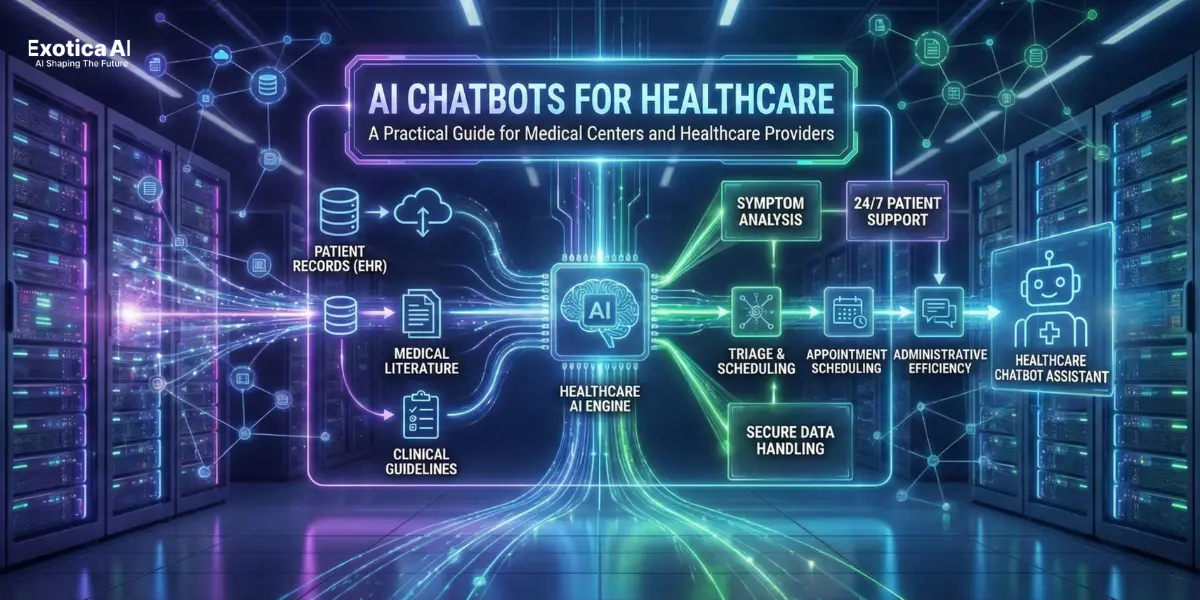
AI chatbots are increasingly being adopted across healthcare to improve patient access, reduce administrative workload, and support everyday operations. Hospitals, clinics, pharmacies, and telehealth providers are using conversational AI to handle routine interactions while allowing healthcare professionals to focus on patient care.
However, healthcare is not like other industries.
In healthcare, even small mistakes can impact patient trust, data privacy, and regulatory compliance. This is why AI chatbots in medical environments must be designed and deployed with far more care, structure, and oversight than chatbots used in retail or customer support.
This guide explains how AI chatbots are used in healthcare today, which use cases are appropriate, and how healthcare providers can implement them responsibly without compromising patient safety or quality of care.
What Is a Healthcare AI Chatbot?
A healthcare AI chatbot is a conversational assistant that helps patients and healthcare teams with non-clinical, non-diagnostic tasks. These chatbots communicate via text or voice and are built to manage routine interactions while escalating complex, sensitive, or urgent cases to qualified healthcare professionals.
Healthcare chatbots are commonly used by:
- Hospitals and medical centers
- Clinics and specialty practices
- Pharmacies
- Diagnostic laboratories
- Telehealth and remote care platforms
They are designed to support healthcare delivery, not replace clinicians.
Why AI Chatbots in Healthcare Require a Higher Standard
In many industries, chatbots can be deployed quickly with minimal risk. Healthcare is different because chatbots may interact with sensitive patient information and individuals seeking medical guidance.
A responsible healthcare chatbot must:
- Protect patient data and confidentiality
- Avoid diagnosing conditions or recommending treatment
- Recognize when a situation may be urgent or high-risk
- Escalate conversations to healthcare professionals when needed
- Clearly communicate its role and limitations to patients
Without these safeguards, even advanced AI systems can create serious risks. This is why healthcare chatbots must be purpose-built, carefully governed, and continuously monitored.
Benefits of AI Chatbots in Healthcare
When implemented responsibly, AI chatbots provide measurable benefits for both patients and healthcare providers.
Improved Patient Access
Chatbots offer 24/7 access to basic services such as appointment booking, FAQs, reminders, and onboarding information, even outside clinic hours.
Faster Handling of Routine Requests
By managing repetitive administrative tasks, chatbots reduce wait times and allow healthcare staff to focus on urgent, complex, and patient-facing work.
Greater Operational Efficiency
Healthcare chatbots help reduce call volumes, lower missed appointment rates, automate follow-ups, and streamline administrative workflows.
Privacy-Conscious Communication
Many patients prefer asking sensitive questions anonymously. Chatbots provide a comfortable and judgment-free way to access information.
Scalable Support
AI chatbots can assist large numbers of patients at the same time, making them suitable for growing healthcare organizations.
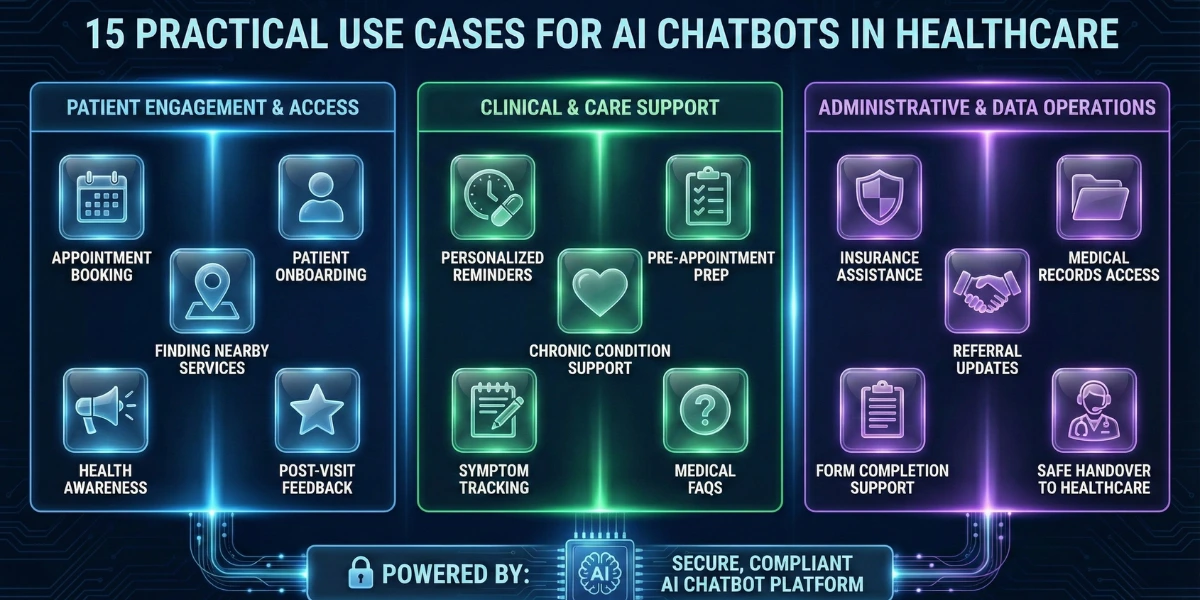
15 Practical Use Cases for AI Chatbots in Healthcare
1. Appointment Booking and Scheduling
Patients can book, confirm, reschedule, or cancel appointments through a simple conversation.
2. Patient Onboarding and Education
Chatbots guide patients through onboarding, answer common questions, and share educational resources about services and procedures.
3. Personalized Reminders
Automated reminders help patients stay on track with medications, refills, vaccinations, and follow-up visits.
4. Finding Nearby Medical Services
Chatbots help patients locate clinics, pharmacies, or diagnostic centers based on their location.
5. Pre-Appointment Preparation
Patients receive clear instructions before tests or procedures, such as fasting requirements or preparation steps.
6. Insurance and Coverage Assistance
Chatbots help patients understand coverage, billing processes, and insurance-related questions.
7. Chronic Condition Support
Structured messaging helps patients manage long-term conditions while keeping care teams informed.
8. Symptom Tracking
Patients can log symptoms or side effects over time, supporting better follow-up without replacing medical assessment.
9. Health Awareness and Prevention Campaigns
Chatbots deliver targeted information about flu season, screenings, and preventive care.
10. Medical Records and Results Access
Patients can securely request and receive lab results or medical documents.
11. Medical FAQs
Chatbots provide consistent answers to common questions while escalating sensitive topics.
12. Referral Updates
Patients receive updates about specialist referrals, timelines, and next steps.
13. Post-Visit Feedback and Surveys
Conversational surveys increase response rates and provide actionable insights.
14. Form Completion Support
Chatbots follow up on incomplete intake or consent forms and collect information conversationally.
15. Safe Handover to Healthcare Professionals
When complexity or emotional risk increases, the chatbot escalates the conversation with full context.
How Healthcare AI Chatbots Operate in Real Environments
A healthcare chatbot is not a single tool. It is a coordinated system that understands patient language, maintains context across conversations, and responds clearly while respecting medical boundaries.
Reliable healthcare chatbots are supported by:
- Approved medical content and workflows
- Secure integrations with healthcare systems
- Continuous monitoring and updates
- Clear escalation and handover rules
- Ongoing human oversight
This ensures accuracy, safety, and long-term compliance.
Limitations and Risks of AI Chatbots in Healthcare
While AI chatbots provide many advantages, they must be used responsibly.
Potential challenges include:
- Risk of misinformation if boundaries are unclear
- Privacy concerns when handling patient data
- Over-reliance on automation
- Lack of transparency about chatbot limitations
These risks are managed through strict scope definition, strong security controls, and clear escalation to healthcare professionals.
An Important Reality: Not All AI Chatbots Are Healthcare-Ready
General-purpose AI tools are not designed for healthcare environments. Healthcare chatbots must be purpose-built, carefully governed, and regularly reviewed to meet medical, ethical, and regulatory expectations.
Frequently Asked Questions
Final Thoughts
AI chatbots can significantly improve efficiency, accessibility, and patient experience in healthcare when implemented responsibly. The most successful deployments focus on safety, transparency, and collaboration between technology and healthcare professionals.
At Exotica AI Solutions, we work with healthcare organizations to design and implement AI chatbot and automation solutions built specifically for medical environments, with a strong focus on patient safety, secure integrations, and responsible AI use.
AI in healthcare is not about replacing clinicians.
It is about supporting care delivery with intelligent, well-governed automation.

Mohit Thakur is an experienced Digital Marketing Expert, SEO Team Leader, and Content Writer with over 6 years of expertise in search engine optimization, content strategy, and digital growth. He specializes in research-driven SEO and crafting high-quality, compelling content that helps businesses improve their online visibility, organic traffic, and lead generation.
With hands-on experience across multiple industries, Mohit focuses on creating user-focused, well-researched content aligned with the latest Google algorithms and AI search trends. His approach combines technical SEO, content writing, content optimization, and data analysis to deliver consistent and measurable results.