
The Definitive Pillar Guide to Unified Conversational AI
Customer expectations have permanently shifted. Users expect immediate, intelligent, and contextual responses—whether they speak, type, or tap.
Voice AI and chatbots working together now define modern omni-channel engagement.
Organizations that unify conversational AI across voice, web, mobile, messaging apps, and internal systems create:
- Seamless user journeys
- Context-aware automation
- Reduced response friction
- Higher conversion rates
- Stronger customer retention
Companies such as Exotica AI Solutions are helping enterprises design unified conversational ecosystems that integrate automation, analytics, personalization, and human oversight within one scalable architecture.
What Is Voice AI?
Voice AI combines:
- Automatic Speech Recognition (ASR)
- Natural Language Processing (NLP)
- Machine Learning models
- Speech synthesis technology
Unlike traditional IVR systems, modern Voice AI allows open-ended conversation.
Core Capabilities
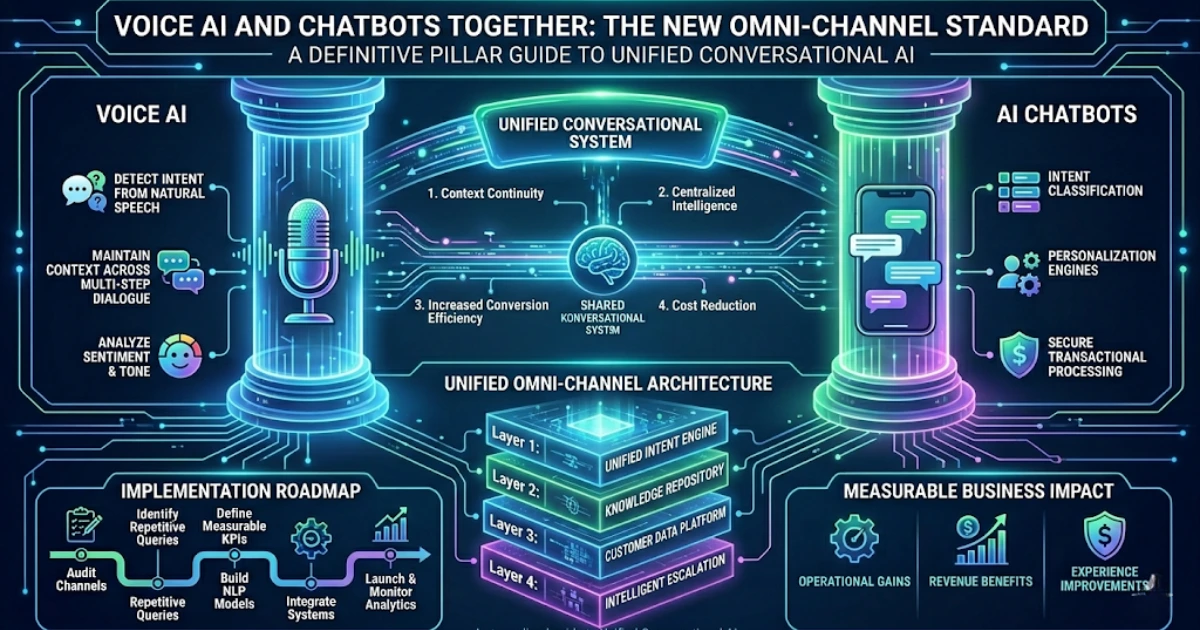
- Detects intent from natural speech
- Maintains context across multi-step dialogue
- Converts speech to structured data
- Generates human-like voice responses
- Analyzes sentiment and tone
Business Applications
- Virtual call center agents
- Healthcare triage systems
- Financial service automation
- Appointment scheduling
- Order processing systems
Voice AI improves:
- First-call resolution
- Average handling time
- Customer satisfaction
What Are AI Chatbots?
AI chatbots are intelligent text-based conversational systems deployed across:
- Websites
- Mobile applications
- Messaging platforms
- Social media channels
- Enterprise dashboards
Advanced Chatbot Capabilities
- Intent classification
- Named entity recognition
- Context tracking
- Personalization engines
- Secure transactional processing
When integrated with backend systems, chatbots can:
- Pull real-time inventory
- Schedule appointments
- Qualify leads
- Process payments
- Trigger CRM updates
Why Voice AI and Chatbots Must Work as One System
Customers do not think in channels. They expect continuity.
A unified conversational system delivers:
1. Context Continuity
- Users can switch from chat to voice seamlessly
- Conversation history transfers automatically
- No repetition of information
2. Centralized Intelligence
- Shared NLP engine
- Unified analytics dashboard
- Single knowledge base
- Consistent brand voice
3. Increased Conversion Efficiency
- Guided product recommendations
- Automated appointment booking
- Cross-channel cart recovery
- Intelligent upsell prompts
4. Cost Reduction
Organizations report:
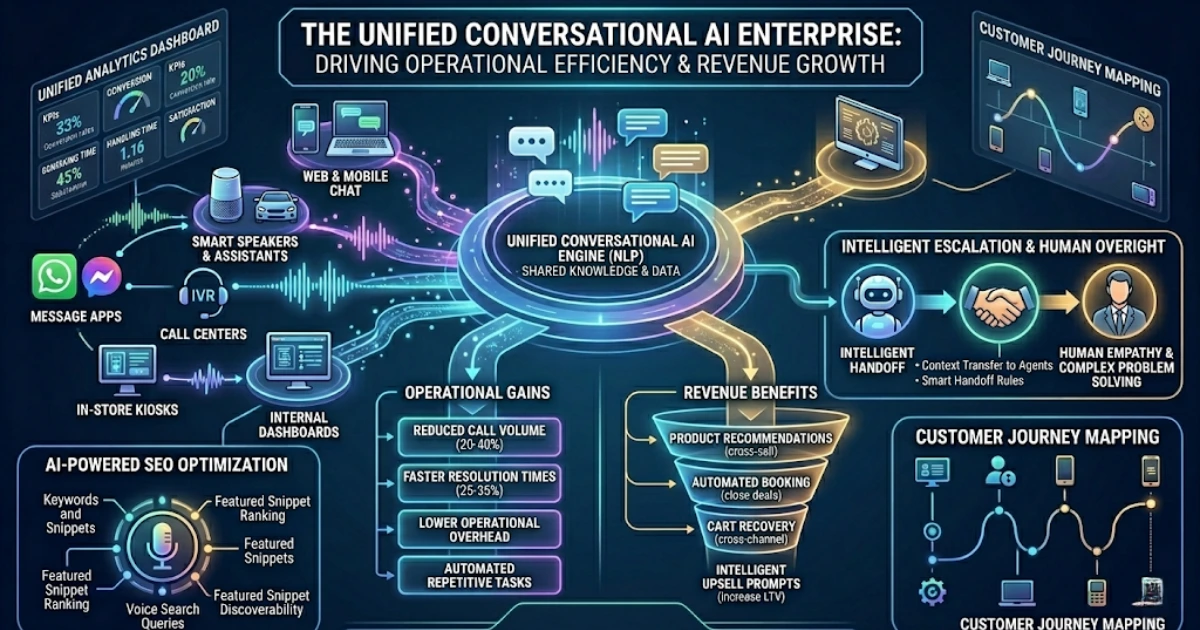
- 20–40% reduction in call volume
- 25–35% faster resolution times
- Lower operational overhead
5. Enhanced Customer Experience
- Faster responses
- Personalized interactions
- Reduced friction
- Higher trust
Why It Matters
Voice queries are:
- Longer
- Question-based
- Conversational
- Intent-driven
Examples:
- “How does Voice AI reduce call center costs?”
- “What is the difference between chatbots and conversational AI?”
- “Can AI improve customer support efficiency?”
Optimizing for these queries increases:
- Voice engine visibility
- Featured snippet ranking
- AI-generated overview inclusion
Measurable Business Impact
Operational Gains
- Reduced manual workload
- Faster ticket resolution
- Automated repetitive tasks
- Improved escalation routing
Revenue Benefits
- Higher lead qualification rates
- Increased conversion rates
- Reduced cart abandonment
- Enhanced upselling opportunities
Experience Improvements
- Lower bounce rates
- Increased dwell time
- Stronger engagement signals
- Higher satisfaction scores
Technical Architecture of Omni-Channel AI
A scalable system includes
Layer 1: Unified Intent Engine
- Shared NLP model
- Cross-channel learning
- Centralized intent database
Layer 2: Shared Knowledge Repository
- Real-time content updates
- Compliance-ready documentation
- Unified response structure
Layer 3: Customer Data Platform
- Behavioral tracking
- Personalization logic
- Journey mapping
Layer 4: Intelligent Escalation
- Smart routing rules
- Context transfer to agents
- Priority-based handling
Key Takeaways
- Voice AI and chatbots must share one intelligence layer
- Omni-channel continuity increases customer retention
- NLP improves personalization and response accuracy
- Unified systems reduce operational costs
- Conversational AI enhances search visibility
Implementation Roadmap
To deploy successfully:
-
- Audit communication channels
- Identify repetitive queries
- Define measurable KPIs
- Build unified NLP models
- Integrate backend systems
- Launch in phases
- Monitor analytics continuously
Organizations partnering with experienced providers like Exotica AI Solutions gain structured deployment strategies and measurable ROI tracking.
Future of Conversational AI
Emerging advancements include:
- Emotion-aware voice systems
- Real-time multilingual processing
- Predictive behavior modeling
- Generative AI-driven personalization
- Proactive engagement triggers
The competitive advantage belongs to organizations that unify voice and text intelligence instead of deploying isolated tools.
Frequently Asked Questions
Final Thoughts
Voice AI and chatbots are no longer optional digital tools. Together, they form the foundation of intelligent omni-channel engagement.
Businesses that deploy unified conversational architecture benefit from:
- Higher customer satisfaction
- Improved operational efficiency
- Increased conversion rates
- Stronger digital authority
Conversational AI is not simply automation. It is a strategic infrastructure that enables brands to understand user intent, deliver contextual responses, and create measurable growth across every customer touchpoint.

Mohit Thakur is an experienced Digital Marketing Expert, SEO Team Leader, and Content Writer with over 6 years of expertise in search engine optimization, content strategy, and digital growth. He specializes in research-driven SEO and crafting high-quality, compelling content that helps businesses improve their online visibility, organic traffic, and lead generation.
With hands-on experience across multiple industries, Mohit focuses on creating user-focused, well-researched content aligned with the latest Google algorithms and AI search trends. His approach combines technical SEO, content writing, content optimization, and data analysis to deliver consistent and measurable results.