
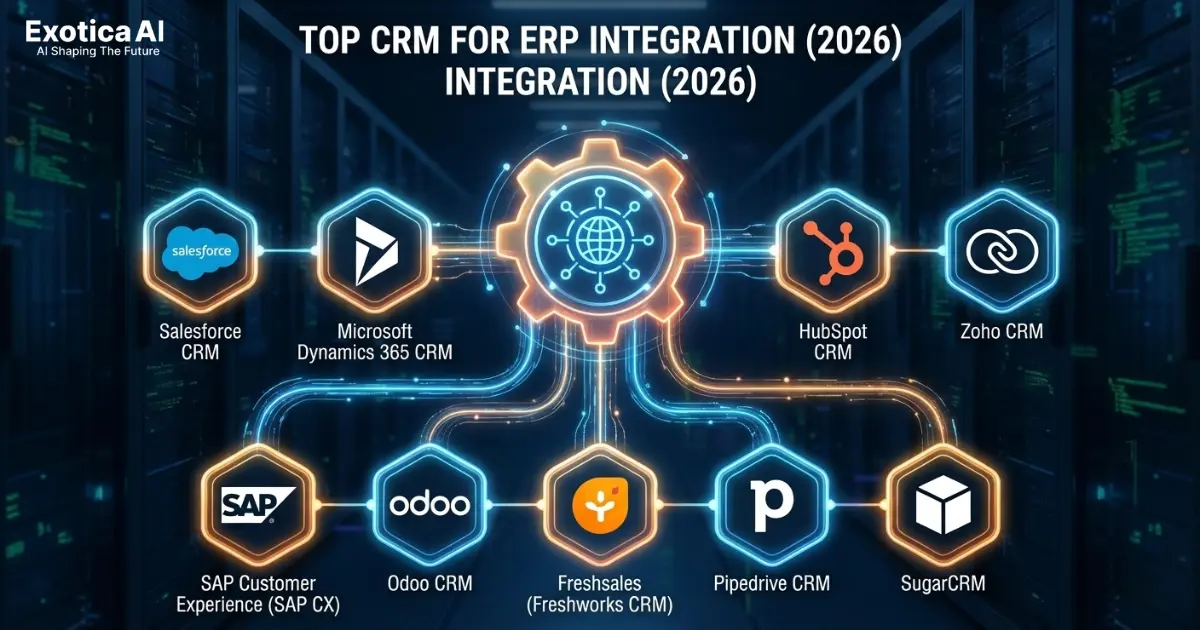
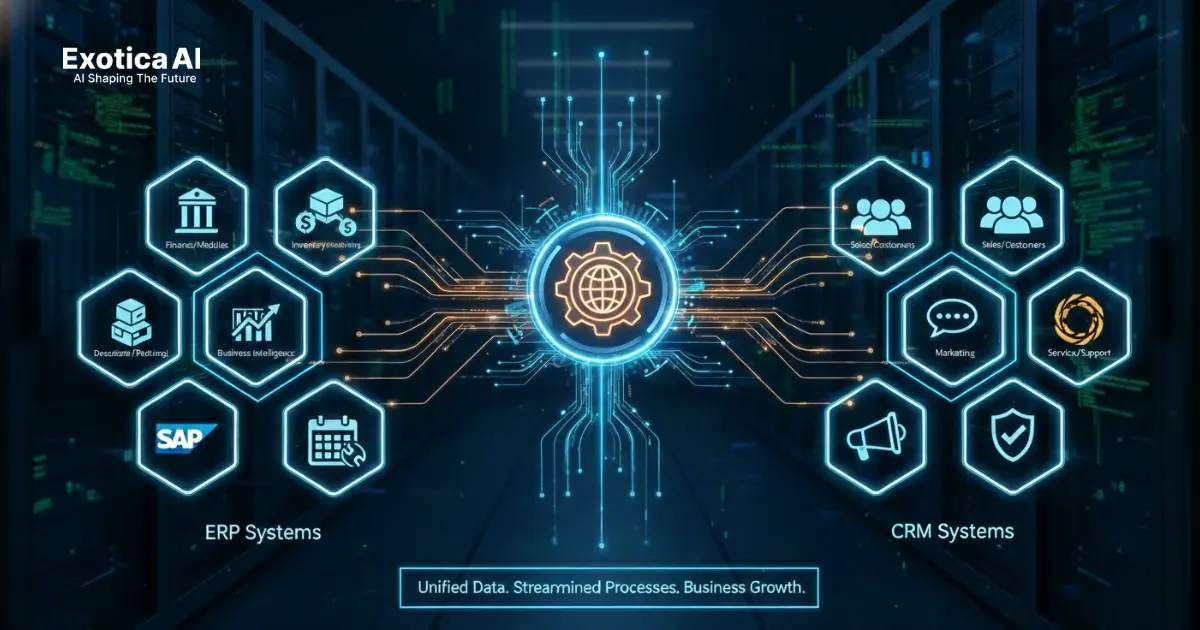
As businesses across the United States scale operations in 2026, disconnected systems are no longer sustainable. Sales teams need real-time visibility into inventory and pricing, finance teams require accurate order data, and leadership demands unified reporting. This is why ERP CRM integration has become a strategic priority rather than a technical upgrade.
Choosing the right CRM that integrates seamlessly with ERP systems can improve customer experience, accelerate revenue cycles, and eliminate costly manual processes. In this guide, we explore the 10 best CRMs for ERP integration in 2026, focusing on real-world usability, scalability, and compatibility for US-based organizations.
Why ERP CRM Integration Is Critical in 2026
Modern businesses no longer operate in silos. Customers expect faster responses, accurate delivery timelines, and consistent communication across channels. Without ERP CRM integration, teams rely on fragmented data, duplicated work, and delayed decision-making.
By integrating CRM and ERP systems, businesses gain:
- A unified view of customers, orders, and finances
- Faster quote-to-cash and order-to-invoice cycles
- Improved forecasting and reporting accuracy
- Better compliance and audit readiness
- Enhanced customer satisfaction
For US companies managing multi-state operations, complex tax structures, and hybrid cloud environments, integration is essential for long-term growth.
What Makes a CRM Ideal for ERP Integration?
Not all CRMs are designed with ERP connectivity in mind. The best platforms in 2026 share several characteristics:
- Strong native or API-based ERP connectors
- Compatibility with major ERPs such as SAP, Oracle, NetSuite, Microsoft Dynamics, and Odoo
- Secure data synchronization and role-based access
- Scalability for growing transaction volumes
- Flexibility to support industry-specific workflows
With these criteria in mind, here are the top CRM platforms enabling reliable ERP CRM integration.
1. Salesforce CRM
Salesforce remains the leading choice for enterprises requiring advanced ERP integration. Its ecosystem supports seamless connectivity with SAP, Oracle, NetSuite, and Microsoft Dynamics through APIs and enterprise middleware.
Salesforce is especially effective for organizations managing complex sales pipelines, large customer datasets, and multi-ERP environments. Its analytics and automation capabilities make it a strong option for data-driven US enterprises.
Best suited for: Large enterprises and regulated industries
2. Microsoft Dynamics 365 CRM
Microsoft Dynamics 365 offers one of the most seamless ERP CRM integration experiences, particularly for businesses already using Microsoft ERP modules such as Finance, Supply Chain, or Business Central.
With a unified data model and tight integration across Microsoft products, Dynamics 365 enables real-time synchronization between sales, finance, and operations. This makes it highly attractive to mid-sized and enterprise US organizations.
Best suited for: Microsoft-centric businesses
3. Oracle NetSuite CRM
Oracle NetSuite combines CRM and ERP capabilities within a single platform, eliminating the need for third-party connectors. This native integration allows sales, finance, and operations teams to work from the same dataset.
NetSuite is widely adopted by US SaaS companies, e-commerce businesses, and fast-growing organisations that require financial accuracy and scalability.
Best suited for: Finance-driven and high-growth companies
4. HubSpot CRM
HubSpot CRM is a popular choice among US small and mid-sized businesses due to its ease of use and strong marketing capabilities. While not an ERP-native system, HubSpot integrates with major ERPs through APIs and integration platforms.
Its intuitive interface and fast deployment make it ideal for businesses beginning their ERP CRM integration journey.
Best suited for: SMBs and marketing-led organizations
5. Zoho CRM
Zoho CRM offers flexible ERP integration, especially within the Zoho ecosystem. It also supports connectivity with external ERP platforms using APIs and middleware.
Zoho’s affordability and customization options make it appealing to cost-conscious US businesses seeking scalable automation without enterprise-level complexity.
Best suited for: Budget-conscious small and mid-sized businesses
6. SAP Customer Experience (SAP CX)
SAP CX is designed for organizations already running SAP ERP environments. It provides deep integration with SAP S/4HANA and legacy SAP systems, ensuring consistent data across customer-facing and operational processes.
US enterprises in manufacturing, logistics, and regulated industries often prefer SAP CX for its reliability and compliance features.
Best suited for: SAP-centric enterprises
7. Odoo CRM
Odoo CRM is part of the broader Odoo ERP suite, offering modular flexibility and open-source customization. This allows businesses to tailor ERP CRM integration based on specific operational needs.
Odoo is gaining traction in the US among tech-forward organizations that value control and adaptability.
Best suited for: Growing SMBs and open-source adopters
8. Freshsales (Freshworks CRM)
Freshsales focuses on sales efficiency and customer engagement. It integrates with popular ERPs using APIs and integration tools, enabling real-time access to order and billing data.
Its user-friendly design and AI-driven insights make it attractive to sales-driven US teams.
Best suited for: Sales-focused mid-sized businesses
9. Pipedrive CRM
Pipedrive is a lightweight CRM known for pipeline visibility and simplicity. While it does not offer native ERP integration, it supports connectivity through APIs and third-party platforms.
It works well for smaller US businesses with straightforward sales processes and basic ERP requirements.
Best suited for: Small businesses with simple integration needs
10. SugarCRM
SugarCRM offers high levels of customization and deployment flexibility, including on-premise and cloud options. Its open architecture supports integration with custom and legacy ERP systems.
This makes SugarCRM a practical option for US organizations with unique workflows or non-standard ERP environments.
Best suited for: Custom-heavy and legacy ERP environments
Common ERP CRM Integration Use Cases
Across industries, businesses use ERP CRM integration to streamline critical workflows such as:
- Lead-to-cash automation
- Quote and pricing synchronization
- Inventory-aware sales forecasting
- Automated invoicing and billing
- Customer support access to order history
- Multi-location and multi-entity reporting
These use cases directly improve operational efficiency and customer experience.
Challenges to Consider
Despite its benefits, ERP CRM integration requires careful planning. Common challenges include data inconsistencies, integration latency, and user adoption issues. Successful organizations address these risks by defining data ownership, monitoring integrations continuously, and aligning stakeholders early.
Experienced integration partners like Exotica AI Solutions help businesses design scalable architectures that reduce complexity and improve long-term performance.
Final Thoughts
In 2026, ERP CRM integration is no longer optional for US businesses aiming to compete in a digital-first economy. The right CRM platform enables unified data, faster execution, and better customer relationships. Whether you are a growing SMB or an established enterprise, selecting a CRM that aligns with your ERP strategy is a foundational step toward sustainable growth.
Frequently Asked Questions
ERP CRM integration connects customer-facing systems with back-office platforms so sales, finance, and operations teams share real-time data across the organization.
The best CRM depends on your ERP environment. Salesforce, Microsoft Dynamics 365, and Oracle NetSuite are strong options for US businesses due to their scalability and integration capabilities.
Yes. Cloud-based CRMs like HubSpot, Zoho, and Odoo make integration accessible and affordable for small and mid-sized businesses.
Timelines vary. Simple integrations may take a few weeks, while complex enterprise implementations can take several months depending on customization and data volume.
Absolutely. By providing a unified customer view, integration enables faster responses, accurate information, and more personalized interactions.

Mohit Thakur is an experienced Digital Marketing Expert, SEO Team Leader, and Content Writer with over 6 years of expertise in search engine optimization, content strategy, and digital growth. He specializes in research-driven SEO and crafting high-quality, compelling content that helps businesses improve their online visibility, organic traffic, and lead generation.
With hands-on experience across multiple industries, Mohit focuses on creating user-focused, well-researched content aligned with the latest Google algorithms and AI search trends. His approach combines technical SEO, content writing, content optimization, and data analysis to deliver consistent and measurable results.