
Customer acquisition costs continue to rise across industries. Retention, however, remains one of the most powerful drivers of sustainable growth. I’ve worked with businesses that focused heavily on lead generation but underestimated the impact of proactive communication. When companies combine AI calling systems with CRM intelligence, they unlock a structured, data-driven retention engine.
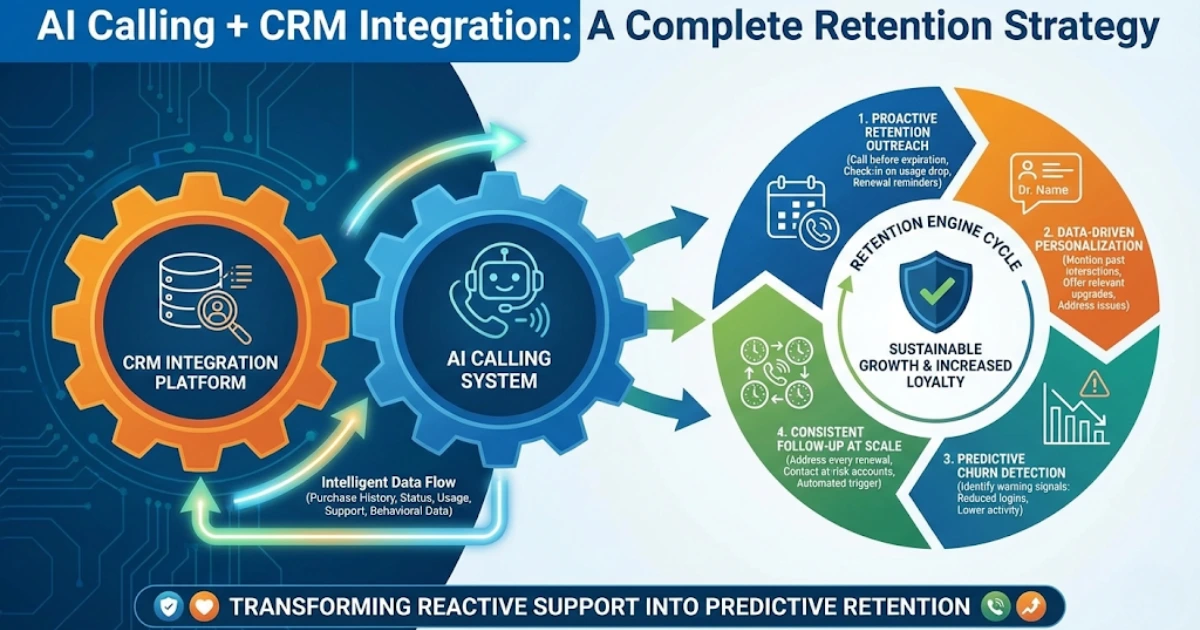
AI calling and CRM integration allow businesses to automate outreach, personalize conversations, and reduce churn without overwhelming internal teams. Instead of reactive support, organizations move toward predictive retention.
What Is AI Calling and CRM Integration?
An AI calling system is an automated voice solution powered by artificial intelligence that can make outbound calls, handle inbound queries, follow structured scripts, and analyze customer responses.
When integrated with a CRM integration platform, the AI system gains access to:
- Purchase history
- Subscription status
- Service usage patterns
- Previous support interactions
- Behavioral engagement data
This combination turns basic automation into intelligent customer retention strategy execution.
Why AI Calling + CRM Integration Increase Retention
Retention improves when communication becomes proactive, timely, and personalized. AI calling and CRM integration support this in several ways.
1. Proactive Retention Outreach
Instead of waiting for customers to cancel, businesses can:
- Call before contract expiration
- Check in when usage drops
- Send renewal reminders
- Offer tailored incentives
This proactive approach reduces churn before it happens.
2. Data-Driven Personalization
Personalization is central to retention success. Using CRM insights, AI can:
- Mention past purchases
- Reference service history
- Offer relevant upgrades
- Address recurring issues
This transforms generic outreach into personalized customer engagement.
3. Predictive Churn Detection
CRM data helps identify early warning signals such as:
- Reduced login frequency
- Lower purchase activity
- Support dissatisfaction
AI calling systems can trigger outreach based on predictive models, creating a retention automation strategy that responds before customers disengage.
4. Consistent Follow-Up at Scale
Manual follow-ups are inconsistent. AI ensures:
- Every renewal is addressed
- Every at-risk account is contacted
- Every missed payment triggers outreach
Consistency strengthens trust and long-term loyalty.
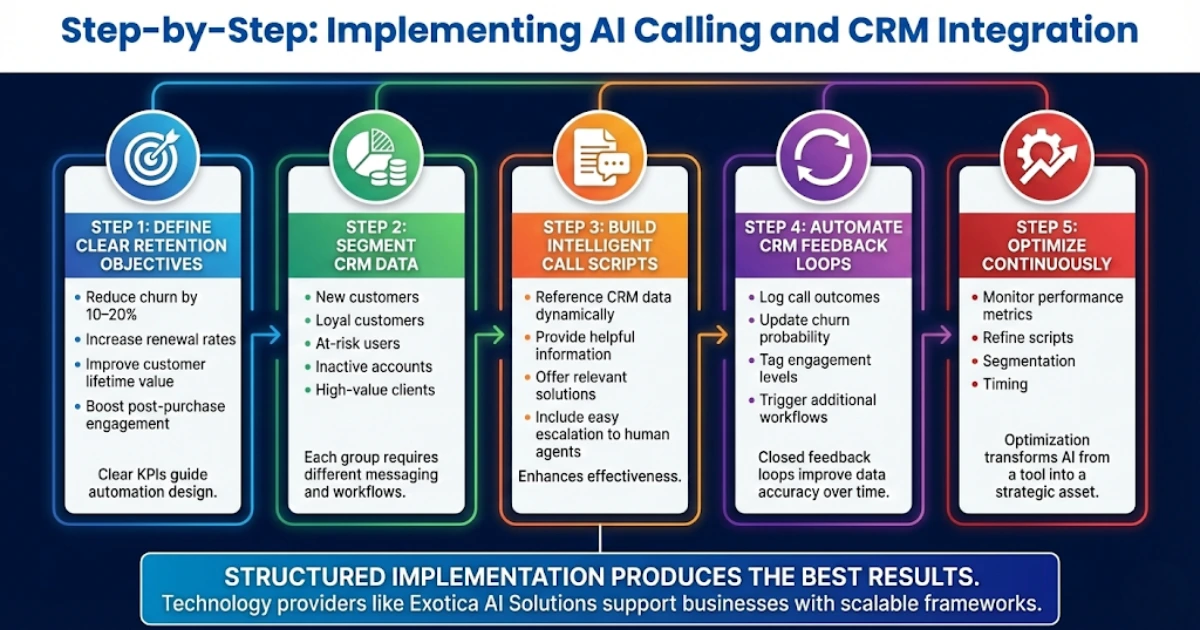
Step-by-Step: Implementing AI Calling and CRM Integration
From my experience, a structured implementation plan produces the best results.
Step 1: Define Clear Retention Objectives
Examples:
- Reduce churn by 10–20%
- Increase renewal rates
- Improve customer lifetime value
- Boost post-purchase engagement
Clear KPIs guide automation design.
Step 2: Segment CRM Data
Divide customers into segments such as:
- New customers
- Loyal customers
- At-risk users
- Inactive accounts
- High-value clients
Each group requires different messaging and workflows.
Step 3: Build Intelligent Call Scripts
Avoid robotic scripts. Instead:
- Reference CRM data dynamically
- Provide helpful information
- Offer relevant solutions
- Include easy escalation to human agents
This enhances (customer engagement platform) effectiveness.
Step 4: Automate CRM Feedback Loops
The system should:
- Log call outcomes
- Update churn probability
- Tag engagement levels
- Trigger additional workflows
Closed feedback loops improve data accuracy over time.
Step 5: Optimize Continuously
Monitor performance metrics and refine scripts, segmentation, and timing.
Optimization transforms AI from a tool into a strategic asset.
Key Metrics to Track in an AI Calling + CRM Retention Strategy
Retention success depends on measurable indicators. Track:
- Churn rate
- Renewal rate
- Customer lifetime value
- Call engagement rate
- Post-call conversion rat
- Customer satisfaction score
- Response time
Monitoring these metrics strengthens (business automation services) performance and long-term ROI.
Real-World Use Cases
Renewal Reminder Campaigns
AI automatically calls customers 7–14 days before contract expiration.
Reactivation Campaigns
Inactive customers receive personalized outreach.
Upsell and Cross-Sell Opportunities
AI recommends relevant products based on CRM behavior patterns.
Post-Support Follow-Up
After a support ticket closes, AI checks satisfaction and updates CRM data.
Companies implementing scalable (AI automation) frameworks often see improved consistency in customer communication.
What to Do and What to Avoid
What to Do
- Personalize every interaction
- Keep human escalation available
- Use CRM data responsibly
- Monitor churn signals
- Test scripts regularly
What to Avoid
- Generic mass calling
- Over-contacting customers
- Ignoring privacy regulations
- Fully replacing human support
AI enhances relationships. It does not replace human empathy.
You’re Not Alone If AI Feels Complex
Many leaders hesitate to implement AI calling because they worry about losing authenticity. I understand that concern.
The most effective systems use AI for structure and scale while preserving human support for complex conversations. When implemented correctly, AI removes repetitive tasks and allows teams to focus on high-value engagement.
When NOT to Rely Solely on AI Calling
AI works best for structured, repeatable workflows. It should not replace human agents when:
- Sensitive emotional issues arise
- Legal disputes occur
- High-value negotiations are involved
- Complex complaints require empathy
Hybrid models deliver the strongest retention results.
Realistic Timeline for Results
Months 1–2
- CRM integration setup
- Call workflow development
- Initial testing
Months 3–6
- Improved renewal engagement
- Reduced churn in key segments
- Higher response rate
Months 6–12
- Increased lifetime value
- Predictive churn prevention
- Scalable retention workflows
Ignoring proactive retention strategies often leads to rising acquisition costs and unstable revenue growth.
The Future of AI Calling and CRM Integration
Advancements in conversational AI and predictive analytics are strengthening retention systems. Future developments include:
- Sentiment analysis during calls
- Real-time behavioral modeling
- Automated upsell recommendations
- Predictive retention dashboards
Businesses implementing intelligent CRM automation and AI-driven outreach gain a measurable competitive advantage.
Technology providers like Exotica AI Solutions are supporting businesses with scalable AI calling frameworks integrated into CRM ecosystems to enhance retention performance.
Frequently Asked Questions

Mohit Thakur is an experienced Digital Marketing Expert, SEO Team Leader, and Content Writer with over 6 years of expertise in search engine optimization, content strategy, and digital growth. He specializes in research-driven SEO and crafting high-quality, compelling content that helps businesses improve their online visibility, organic traffic, and lead generation.
With hands-on experience across multiple industries, Mohit focuses on creating user-focused, well-researched content aligned with the latest Google algorithms and AI search trends. His approach combines technical SEO, content writing, content optimization, and data analysis to deliver consistent and measurable results.