
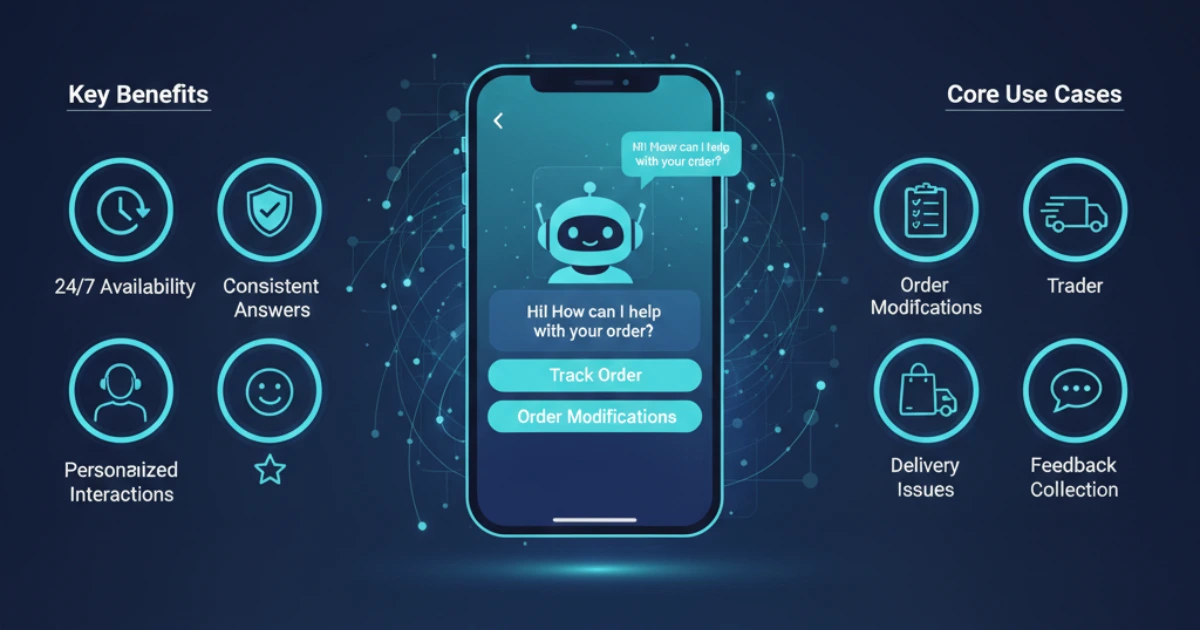
The food delivery industry has transformed how people order meals, but customer expectations have grown just as quickly. Today’s users want instant responses, accurate delivery updates, and quick resolutions when something goes wrong. Traditional support systems—based on phone calls or human-only chat agents—often struggle to keep up with peak-hour demand.
AI chatbots are changing the way food delivery companies handle customer support. By automating routine conversations, tracking orders in real time, and resolving common issues instantly, chatbots help businesses provide faster and more reliable service. This shift is not only improving customer satisfaction but also reducing support costs and enabling companies to scale operations more efficiently.
The Growing Demand for Instant Support in Food Delivery
Modern customers expect:
- Real-time order tracking
- Immediate responses to questions
- Fast issue resolution
- 24/7 support availability
- Seamless communication through apps or messaging platforms
When a delivery is late or an item is missing, customers rarely want to wait in a queue. They expect instant answers. AI chatbots meet these expectations by offering automated, intelligent, and always-available support.
What Are AI Chatbots in Food Delivery?
AI chatbots are intelligent systems that interact with users through text or voice. They use natural language processing to understand customer messages and provide accurate responses.
In food delivery platforms, chatbots are typically integrated into:
- Mobile applications
- Websites
- Messaging apps
- Social media channels
They help customers with
- Placing orders
- Tracking deliveries
- Resolving payment issues
- Requesting refunds
- Getting menu or restaurant information
This automation allows companies to handle thousands of support requests at the same time.
How AI Chatbots Improve Food Delivery Customer Support
Instant Order Tracking
One of the most common customer questions is: “Where is my order?”
AI chatbots can instantly access delivery data and provide real-time updates without human involvement.
24/7 Availability
Food delivery services operate throughout the day, including late nights and weekends. AI chatbots provide support at any hour, ensuring customers always have assistance when they need it.
Faster Issue Resolution
Chatbots can automatically handle common problems such as:
- Late deliveries
- Missing items
- Order cancellations
- Address changes
This reduces waiting times and improves the overall customer experience.
Lower Support Costs
Customer support is a major expense for delivery platforms. AI chatbots reduce the need for large support teams by handling repetitive tasks automatically.
Personalized Interactions
Modern chatbots can analyze customer preferences, order history, and behavior. This allows them to:
- Recommend favorite meals
- Suggest reorders
- Offer personalized discounts
- Provide tailored updates
Key Use Cases of AI Chatbots in Food Delivery
Order Placement Assistance
Customers can browse menus, select items, and complete orders directly within a chatbot conversation.
Delivery Status Updates
Instead of calling support, customers can simply ask the chatbot for delivery updates and receive instant answers.
Refund and Complaint Handling
AI chatbots can collect issue details, initiate refund processes, and escalate complex cases to human agents.
Restaurant and Menu Information
Chatbots provide quick responses about:
- Restaurant availability
- Menu options
- Pricing
- Delivery times
Benefits for Food Delivery Businesses
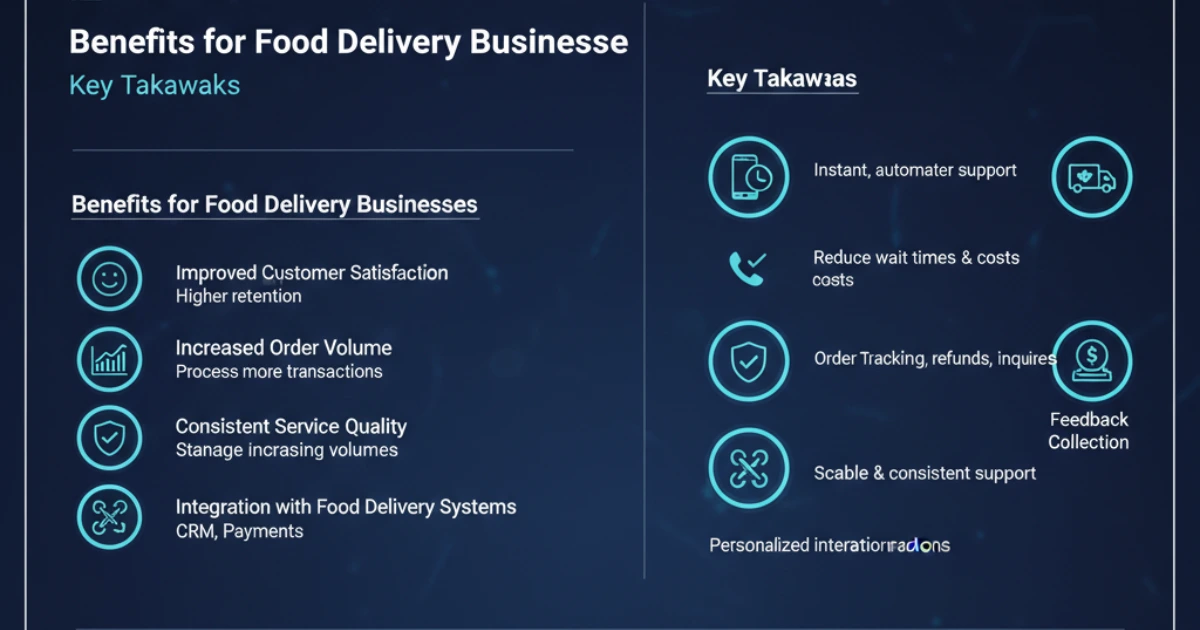
Improved Customer Satisfaction
Faster responses and accurate information lead to better customer experiences and higher retention.
Increased Order Volume
Chatbots can assist with orders while handling support, allowing businesses to process more transactions without increasing staff.
Scalable Customer Support
As the customer base grows, chatbots can manage increasing support volumes without major cost increases.
Consistent Service Quality
AI chatbots provide standardized responses, ensuring consistent support across all interactions.
Integration with Food Delivery Systems
AI chatbots can connect with:
- Order management platforms
- Payment systems
- CRM software
- Restaurant databases
- Delivery tracking systems
This integration allows chatbots to access real-time data and provide accurate responses.
Companies like Exotica AI Solutions build custom chatbot systems that integrate with food delivery platforms, helping businesses automate support and improve customer experiences.
Challenges to Consider
Handling Complex Issues
Not every customer issue can be solved automatically. Chatbots should allow smooth handoffs to human agents.
Data Accuracy
Chatbots depend on accurate order and delivery data. Poor data quality can lead to incorrect responses.
Customer Trust
Clear communication and transparent responses are essential to building trust in automated systems.
With proper design and implementation, these challenges can be effectively managed.
The Future of AI Chatbots in Food Delivery
As AI technology evolves, chatbots will become even more advanced. Future capabilities may include:
- Voice-based ordering and support
- Predictive delivery updates
- Automated driver coordination
- Hyper-personalized meal recommendations
- AI-powered loyalty programs
These advancements will make chatbots central to the entire food delivery experience.
Key Takeaways
- AI chatbots provide instant, automated customer support
- They reduce wait times and operational costs
- Chatbots handle order tracking, refunds, and inquiries
- They enable scalable and consistent support systems
- Personalized interactions improve customer satisfaction
Frequently Asked Questions
Final Thoughts
AI chatbots are transforming customer support in the food delivery industry by delivering faster responses, 24/7 availability, and scalable service. They help companies reduce costs, improve customer satisfaction, and manage growing demand without expanding support teams.
With the right implementation strategy and solutions from providers like Exotica AI Solutions, food delivery businesses can build smarter, more efficient support systems that keep customers satisfied and operations running smoothly.

Mohit Thakur is an experienced Digital Marketing Expert, SEO Team Leader, and Content Writer with over 6 years of expertise in search engine optimization, content strategy, and digital growth. He specializes in research-driven SEO and crafting high-quality, compelling content that helps businesses improve their online visibility, organic traffic, and lead generation.
With hands-on experience across multiple industries, Mohit focuses on creating user-focused, well-researched content aligned with the latest Google algorithms and AI search trends. His approach combines technical SEO, content writing, content optimization, and data analysis to deliver consistent and measurable results.